TL Insights
Back to TL Insights
Renewal of Outdoor Advertising Permits for 2027 in San Salvador: Key Considerations for Businesses


As 2026 draws to a close, businesses with signs, billboards, and other outdoor advertising structures in San Salvador should review the validity of their municipal permits and prepare for the corresponding renewals for 2027.
Outdoor advertising plays an important role in identifying and promoting commercial establishments. However, its installation and continued placement are subject to municipal regulations governing authorization conditions, technical requirements, and the obligations of their owners.
In this context, understanding the applicable procedures and planning ahead for established deadlines allows businesses to maintain their advertising activities within the regulatory framework and avoid potential administrative complications.
Regulatory Framework and Validity of Municipal Permits
The Ordinance Regulating Advertising Structures in the Municipality of San Salvador, approved through Municipal Decree No. 39, published in the Official Gazette on August 8, 2012, and its subsequent amendments, constitutes the regulatory framework governing the installation, modification, continued placement, and removal of advertising structures in the District of San Salvador.
Pursuant to Article 51 of the Ordinance, municipal permits subject to the annual regime are valid for one fiscal year and expire on December 31, without prejudice to the specific conditions applicable to certain categories of advertising structures.
Article 58 further establishes that renewal applications must be submitted during the last three months of the year, subject to compliance with the corresponding requirements.
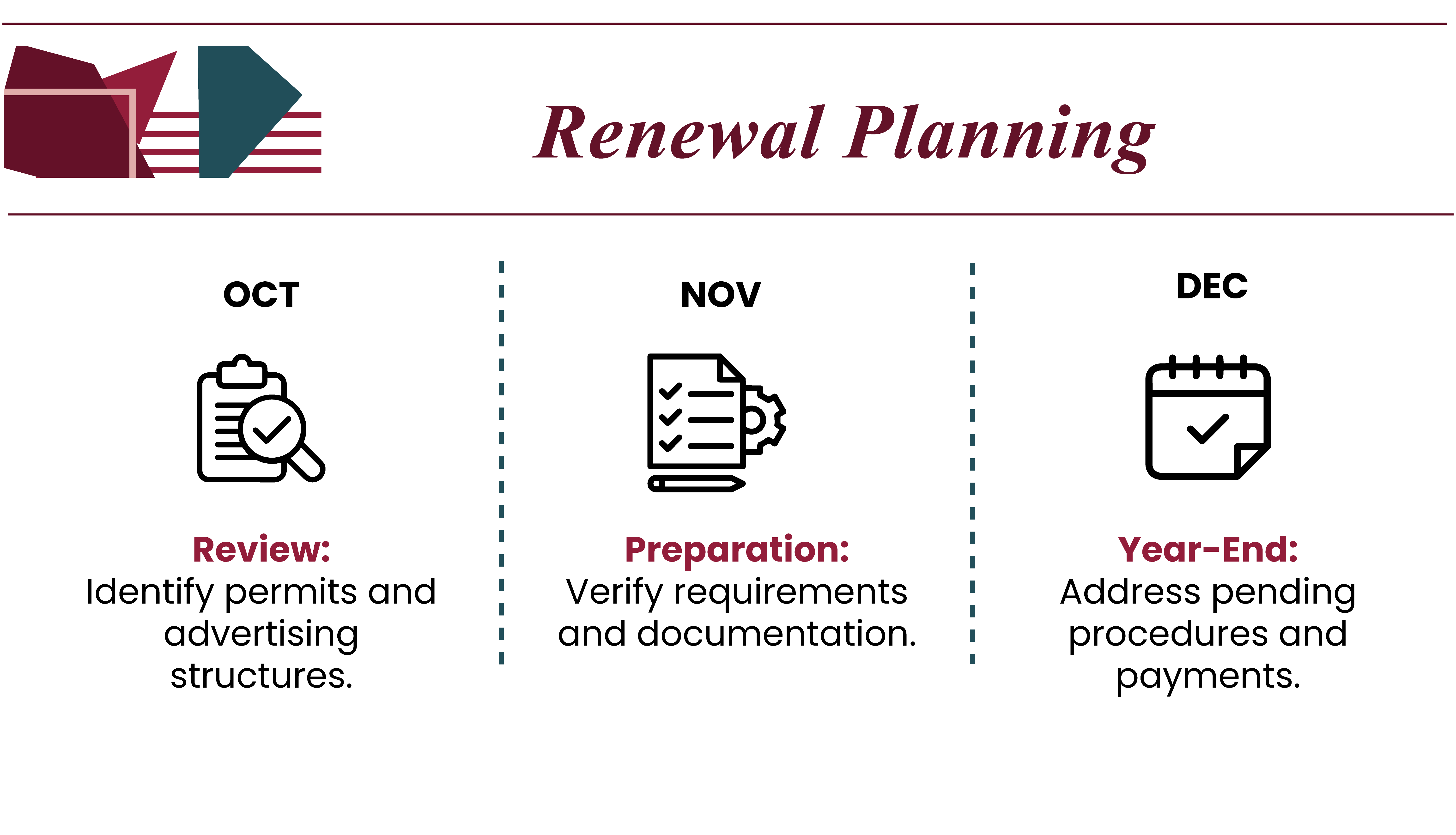
Consequently, the period from October through December 2026 is particularly relevant for businesses to organize the necessary procedures for renewing their permits for 2027.
The Importance of Planning Ahead for Year-End Permit Renewals
Although permits subject to the annual regime expire on December 31, businesses should consider that holiday periods and changes to municipal authorities' operating hours may occur during the final weeks of the year.
These circumstances may reduce the time available to submit applications, complete documentation, address observations, or make the corresponding payments, particularly when procedures are initiated close to year-end.
For this reason, businesses are encouraged to begin renewal procedures during October and November, rather than concentrating these efforts in the final days of December.
Early planning provides a reasonable timeframe to respond to potential requests from municipal authorities and helps ensure that renewals are processed in a timely manner for the 2027 fiscal year.
 Key Considerations for Businesses When Renewing Their Permits
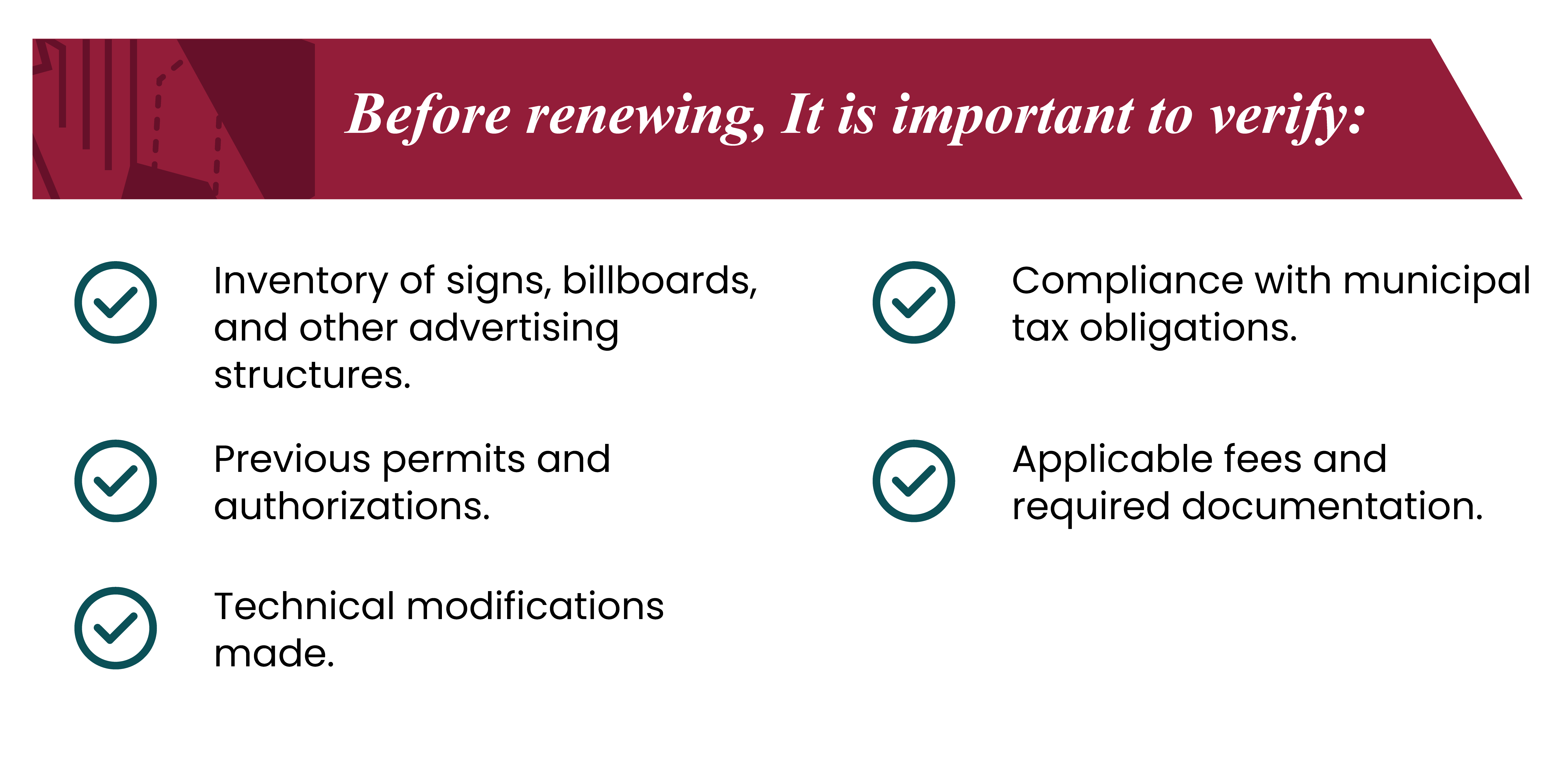
Municipal regulations establish a series of conditions that must be observed when applying for the renewal of advertising structure permits. The main considerations include:
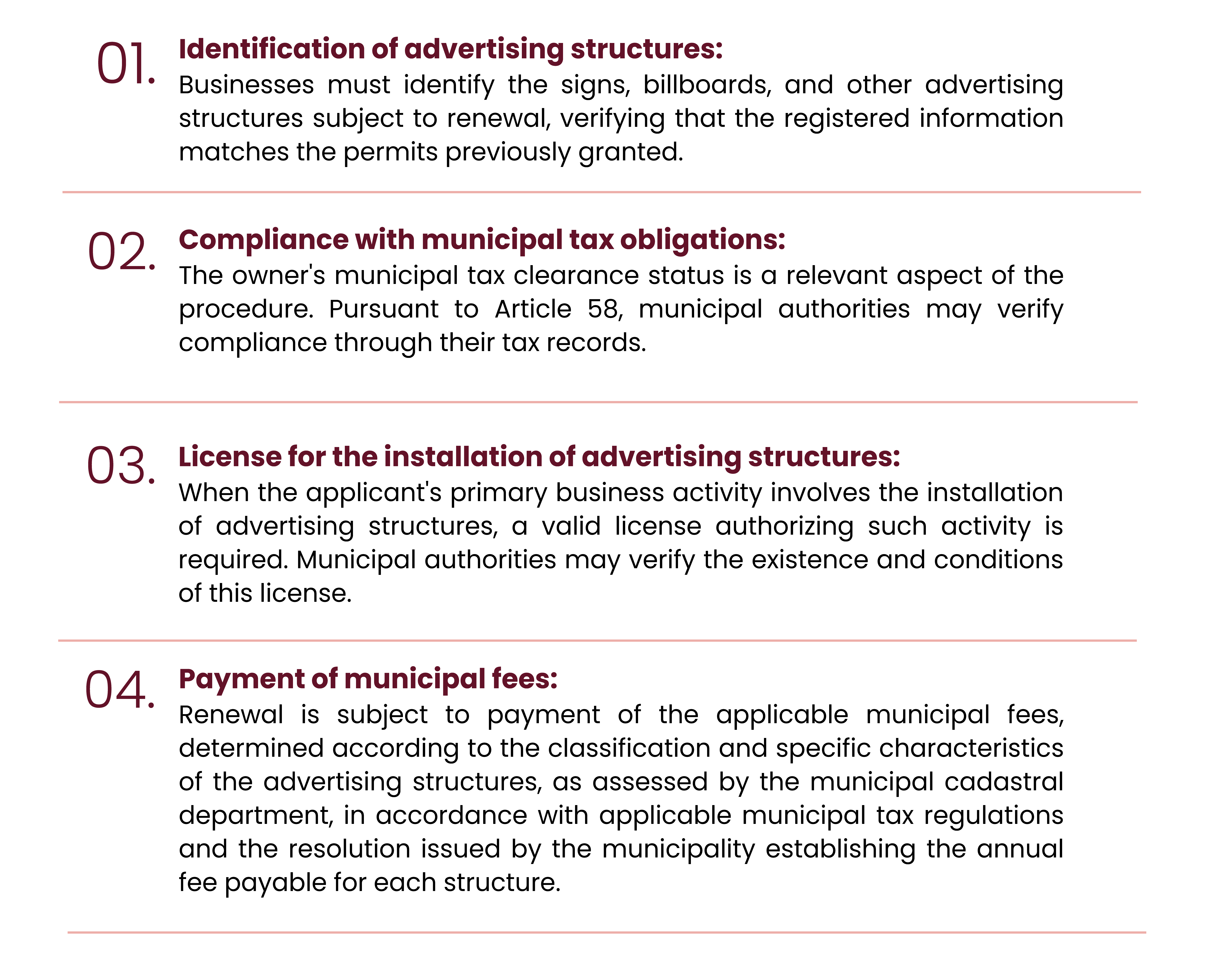 It is important to consider that the applicable conditions and fees may vary depending on the type of advertising structure and the applicant's particular circumstances.
Verification of the Technical Characteristics of Advertising Structures
Permit renewal is not limited to compliance with administrative and tax requirements.
Municipal regulations also authorize municipal authorities to conduct inspections to verify that advertising structures continue to meet the technical conditions under which they were originally authorized.
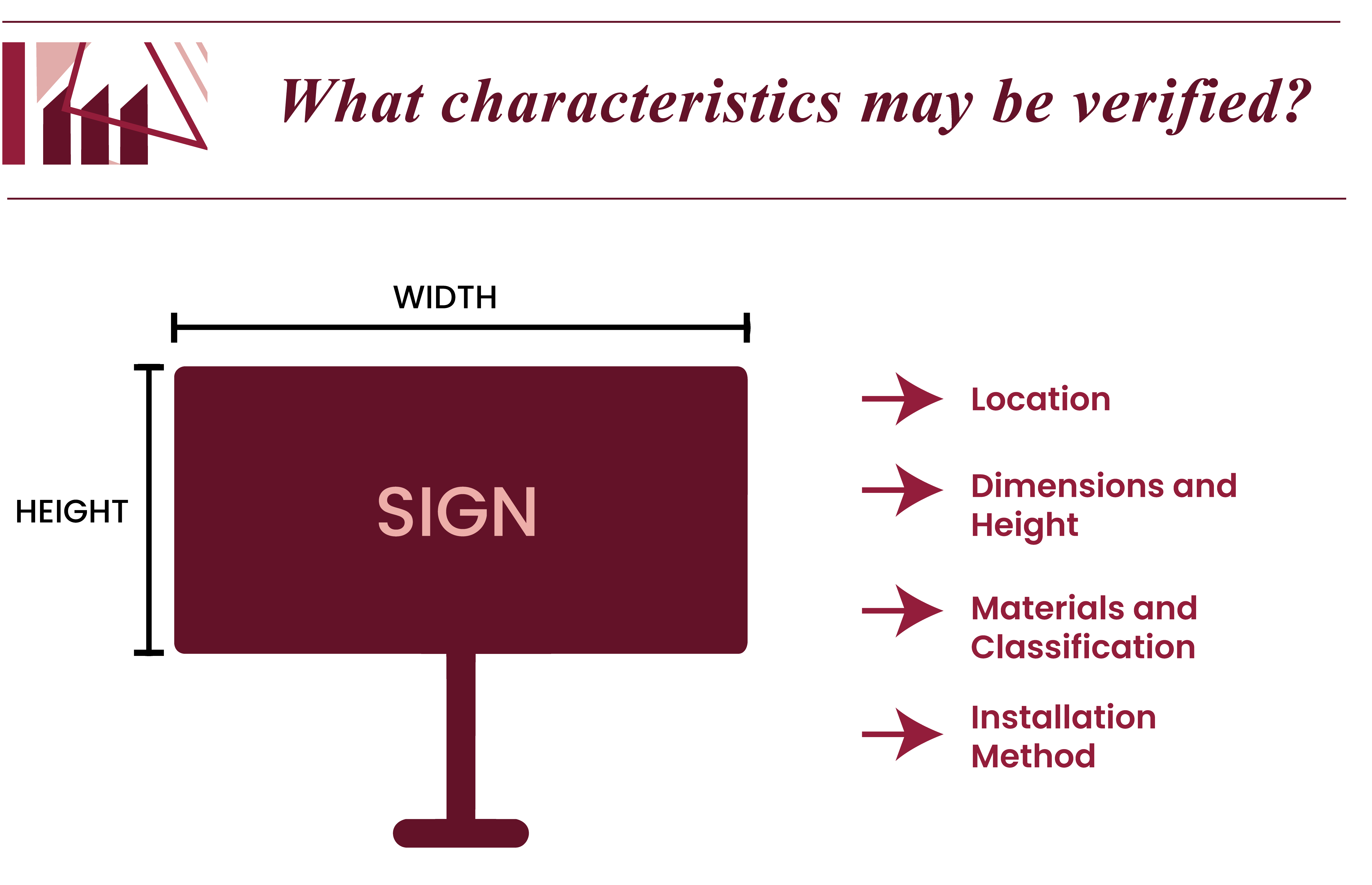
The aspects subject to verification may include the location, dimensions, materials, height, classification, and installation method of advertising structures.
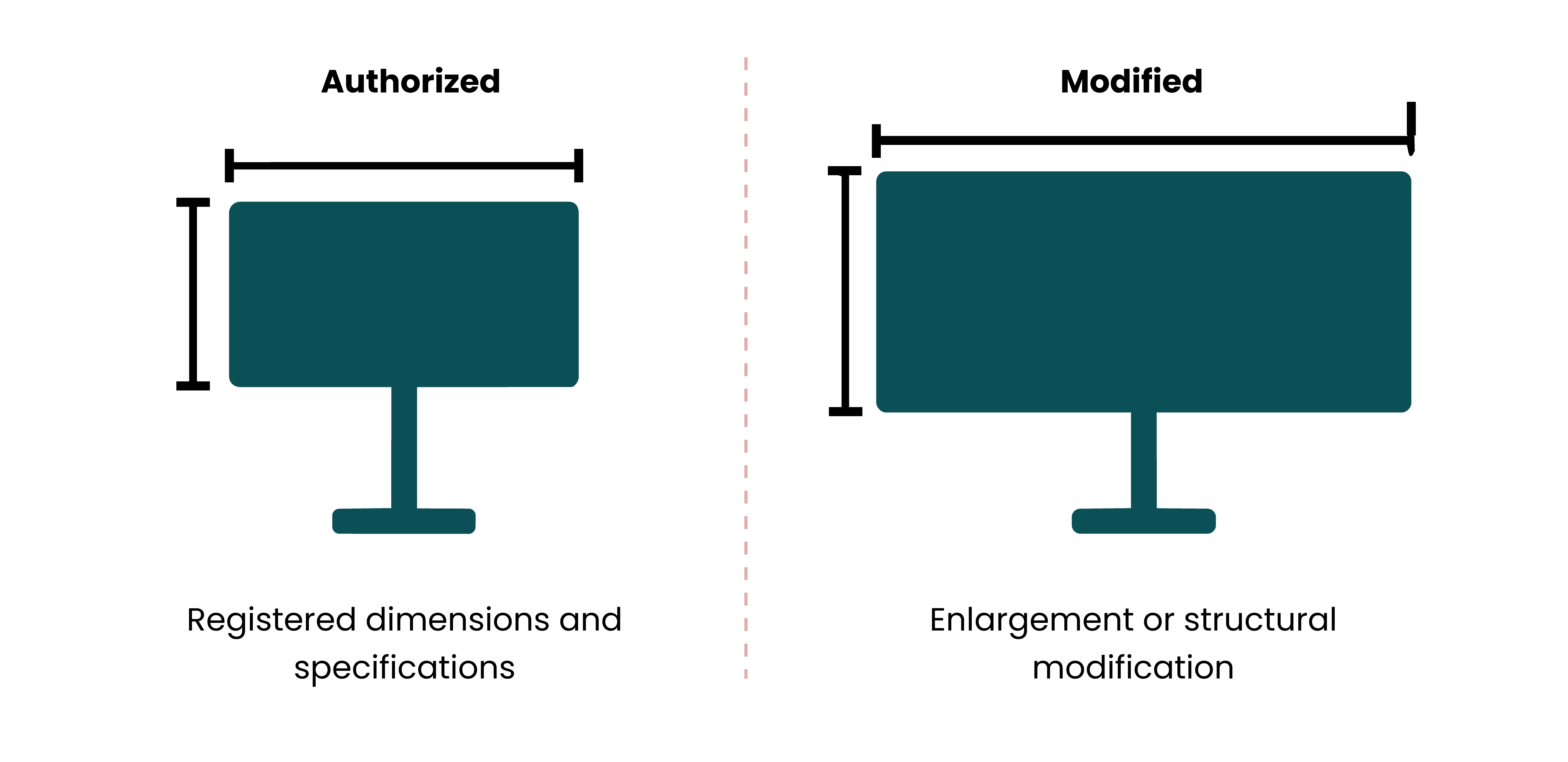
 Additionally, Article 56 governs modifications to previously authorized advertising structures, establishing the need to comply with the corresponding requirements when changes to their dimensions or characteristics are proposed.
For example, if a business obtained authorization to install a sign of specific dimensions and subsequently decided to enlarge it or modify its structure, it must determine whether such changes require an additional authorization procedure, rather than assuming they can be incorporated through an ordinary renewal.
Therefore, businesses are encouraged to review the current conditions of their advertising structures and compare them with the information contained in their municipal permits.
Consequences of Noncompliance with Municipal Obligations
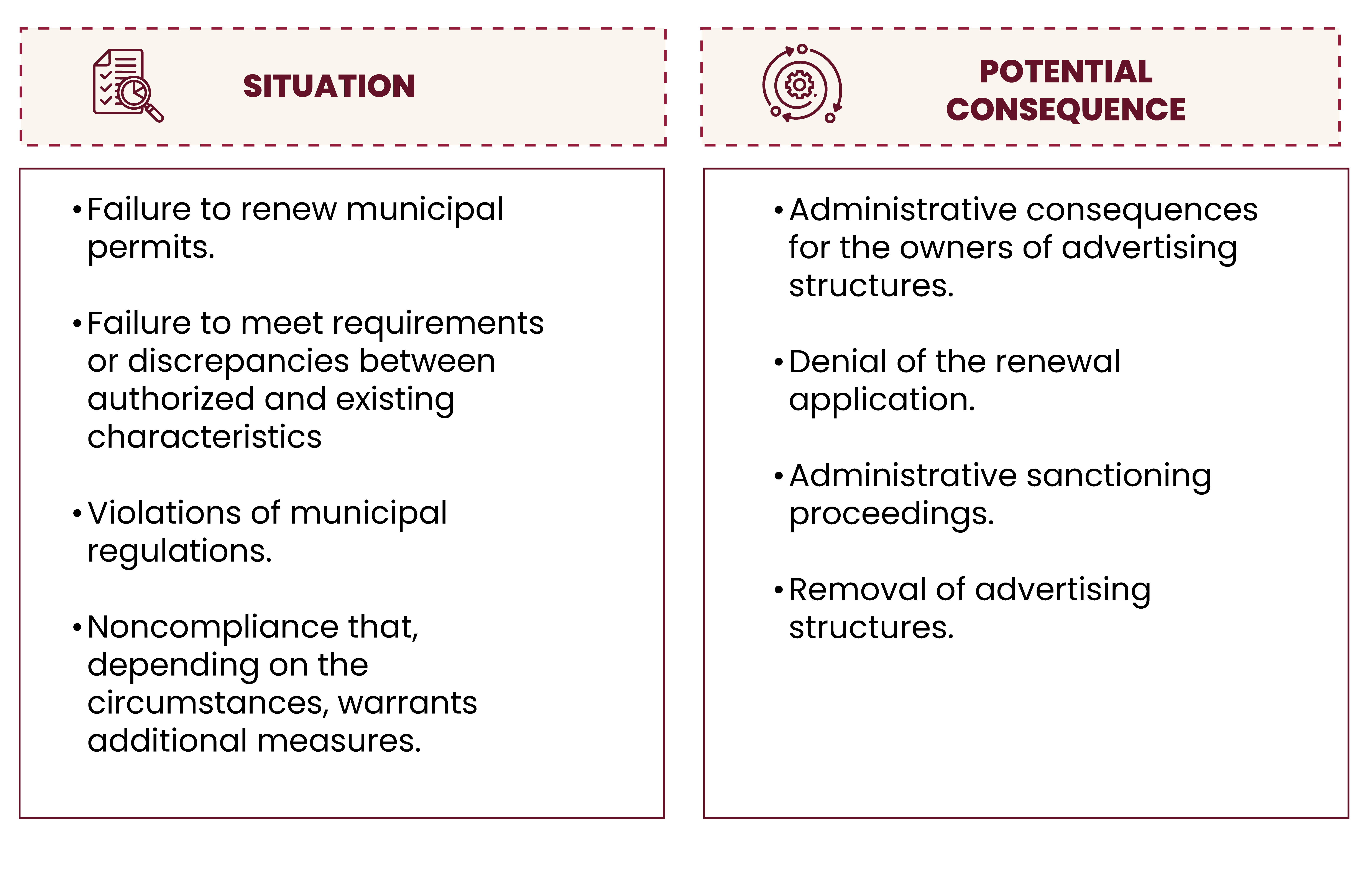
Failure to renew permits or comply with the conditions established therein may result in administrative consequences for the owners of advertising structures.
The Ordinance establishes grounds for denying renewal applications, including failure to meet requirements, discrepancies between authorized and existing characteristics, and other conditions provided under municipal regulations.
Additionally, certain violations may lead to administrative sanctioning proceedings and, depending on the circumstances, measures involving the removal of advertising structures.
 These situations may generate additional costs and affect business operations, particularly when advertising structures form part of a company's commercial identification or branding strategies.
Consequently, keeping permits up to date and periodically verifying compliance with municipal regulations constitutes a preventive measure to reduce legal and administrative risks.
Implications and Recommendations for Businesses
The approaching 2027 fiscal year presents an opportunity for businesses to review the status of their advertising permits and organize the necessary renewal procedures in a timely manner.
To this end, businesses are encouraged to identify installed advertising structures, review previous authorizations, verify any modifications, and confirm compliance with municipal tax obligations.
Likewise, it is advisable to consider year-end holiday periods and potential changes to municipal authorities' operating hours to prevent these circumstances from hindering the timely submission of applications.
 The renewal of advertising permits should form part of businesses' annual regulatory planning, allowing them to anticipate requirements, budget for the corresponding payments, and reduce the risk of administrative observations.
At Torres Legal, we support businesses in complying with their regulatory and municipal obligations, providing legal advice on obtaining and renewing advertising structure permits, as well as assisting with administrative proceedings before the competent authorities.
Next articles in this category

October 2026
From the Trading Floor to Blockchain: The New Paths of Money in El Salvador
For years, investing in El Salvador meant one thing: buying stocks or bonds through a brokerage firm and waiting. But El Salvador's securities market is no longer the small and predictable market it once was. Today, two paths are reshaping how companies raise capital and how individuals can grow their money: securitization and digital assets. Neither is exactly "new," but together they are creating an alternative market alongside the traditional securities market, one that is more flexible, more digital, and, in theory, more accessible.

September 2026
Reforms to the Law for the Promotion of Investment Expansion
The Legislative Assembly approved the reform to the Law for the Promotion of Investment Expansion on September 9, 2026. The reforms will enter into force eight days after their publication in the Official Gazette. The amendments broaden access to the regime by reducing the minimum operating history requirement, allowing participation by corporate groups, easing exclusion rules, and introducing a new methodology for calculating the tax credit.
September 2026
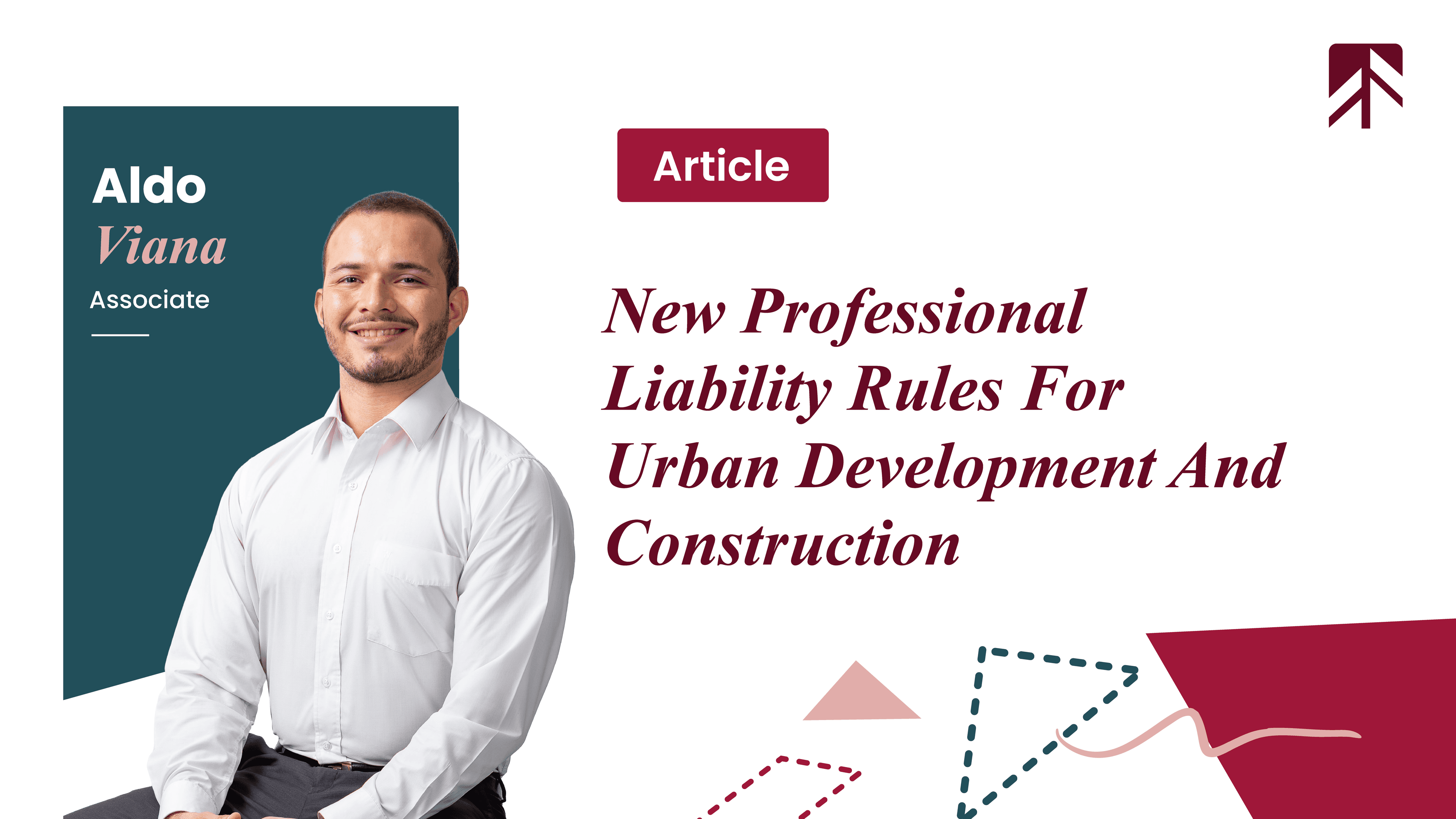
New Professional Liability Rules For Urban Development And Construction
El Salvador has enacted a new Special Law on Professional Liability regulating the planning, design, execution, supervision, control, and maintenance of urban development and construction projects. The law applies to natural and legal persons subject to registration in the Registry of Professionals and Service Providers for Urban Development and Construction. It entered into force on September 19, 2026, as communicated by the Directorate of Territorial Planning and Construction (DOT) on September 21, 2026. As of the date of this publication, the law is not yet available for consultation on the Official Gazette’s website.

August 2026
CNAD Circular No. 008-2026: New Data Protection Compliance Requirements
The National Commission of Digital Assets (CNAD) issued Circular No. 008-2026, addressed to Digital Asset Service Providers and Certifiers, through which it communicates the Guidelines for Personal Data Protection Delegates issued by the State Cybersecurity Agency (ACE).